
→ site location;
→ period of time the scaffold is required to be in place for the intended use (normally this can be 6 months up to 2 years);
→ height, length and any critical dimensions which may affect the scaffold (lifts height etc);
→ number of boarded lifts (boarded at every floor level or other);
→maximum working loads to be imposed and maximum number of people using the scaffold at any one time;
→ type of access onto the scaffold eg staircase, ladder access bay, external ladders;
→ any bridged openings in the scaffold, any bridge over obstacles or for door access;
→ any Loading Bays (progressive LB, staggered LB or bridged LB);
→ whether there is a requirement for sheeting, netting or brick guards;
→ any specific requirements or provisions eg pedestrian walkway, gantry, fans, any restriction on tie locations, inclusion/provision for mechanical handling plant eg: hoist;
→ nature of the ground conditions or supporting structure
information on the structure/building the scaffold will be erected against together with any relevant dimensions and drawings;
→ any restrictions that may affect the erection, alteration or dismantling process.
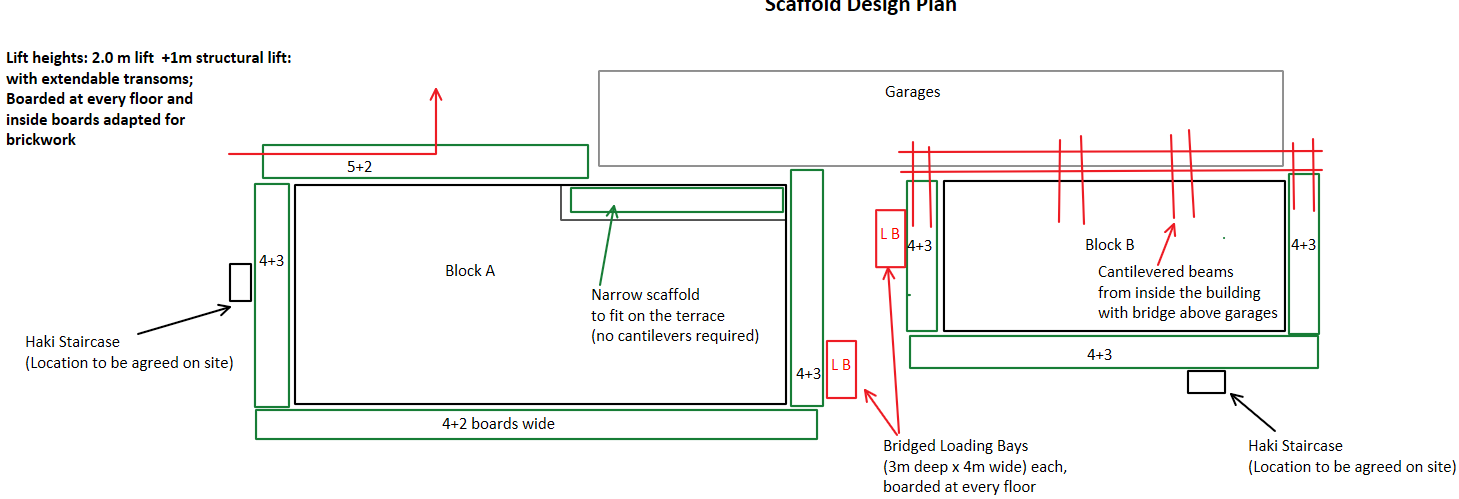
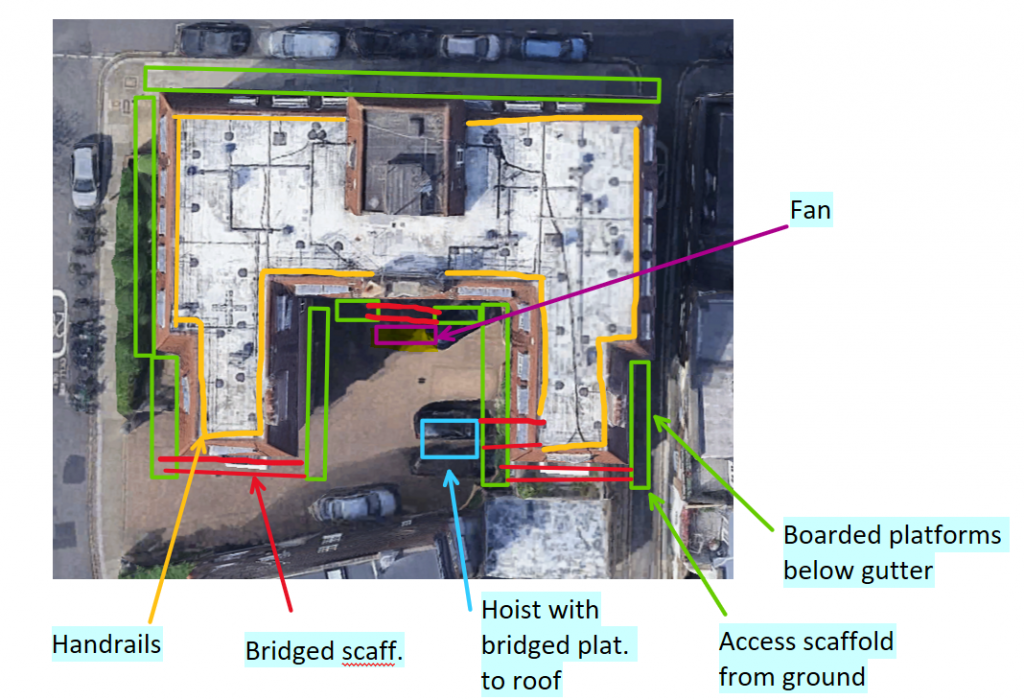
A Scaffold Mark-up is essentially a drawing or diagram of the existing site or structure, marked up by the client, scaffold contractor, or designer to highlight the intended scaffold arrangement, access points, and any critical details that need to be considered during the design process. It provides visual context to the project requirements and helps to ensure that all parties involved have a clear understanding of what is needed.

→ facade retention
→ buttressed free-standing scaffold
→ complex loading bays
→ temporary ramps and elevated roadways
→ bridge scaffold
→ pedestrian footbridges or walkways
→ pavement gantries
→ power line crossings
→ radial / splayed scaffold on contoured facades
→ sealing end structures (such as temporary screens)
→ advertising hoardings/banners
→ access scaffold with more than the 2 working lifts Chang
→ temporary roofs and temporary buildings
→ mobile and static towers
→ staircases and fire escapes (unless covered by manufacturers instructions)
→ towers requiring guys or ground anchors
→ slung and suspended scaffold
→ marine scaffold
→ lifting gantries and towers
→ system scaffold outside manufacturers guidance
→ temporary storage on site
→ rubbish chute
→ buttressed free-standing scaffold
→ support scaffold
→ free standing scaffold
→ spectator terraces and seating stands
→ offshore scaffold
→ protection fans
→ boiler scaffold
→ steeple scaffold
→ sign board supports
→ masts, lighting towers and transmission towers
→ any scaffold structure not mentioned above that falls outside the ‘compliant scaffold’ criteria in TG20 or similar guidance from manufacturers of system scaffolds.
Some designers are issuing drawing as Preliminary only; at this stage there is no liability applicable to the designer and it is very likely that no calculations were performed.
→ maximum bay lengths
→ maximum lift heights
→ platform boarding arrangement and the number of boarded lifts that can be used at any one time
→ safe working load / load class
→ maximum leg loads
→ maximum tie spacing both horizontal and vertical and tie duty
→ details of additional elements such as beamed bridges, fans, loading bays etc, which may be a standard configuration or specifically designed
→ any other information relevant to the design, installation or use of the scaffold
→ reference number, date etc. to enable recording, referencing and checking
The scaffold designer must provide relevant information in the scaffold design.
This should include as a minimum:
A scaffold is covered by a design only if the design is issued
FOR CONSTRUCTION